
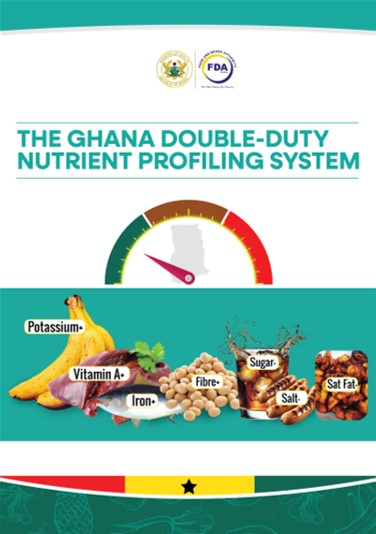
The Ghana Double-Duty Nutrient Profiling Model ↓ download pdf
Ghana faces a growing double burden of diet-related non-communicable diseases, undernutrition, and micronutrient deficiencies, highlighting the urgent need for strategic, evidence-informed interventions. The Ghana Double-Duty Nutrient Profiling System (NPS) is a pioneering tool designed to support food policies that promote healthier diets across all population groups. It aligns with international best practices while being tailored to Ghana’s unique dietary landscape, public health priorities, and regulatory needs. The system provides a foundation for policies such as front-of-pack labelling, food marketing restrictions, fiscal measures, and public food procurement programmes, while helping consumers make informed dietary choices. Developed by the government of Ghana in collaboration with the Food and Drugs Authority, academia, the University of Ghana School of Public Health, and international partners, the NPS aims to strengthen Ghana’s commitment to improving food environments and reducing the double burden of malnutrition for a healthier and more nutritionally secure future.
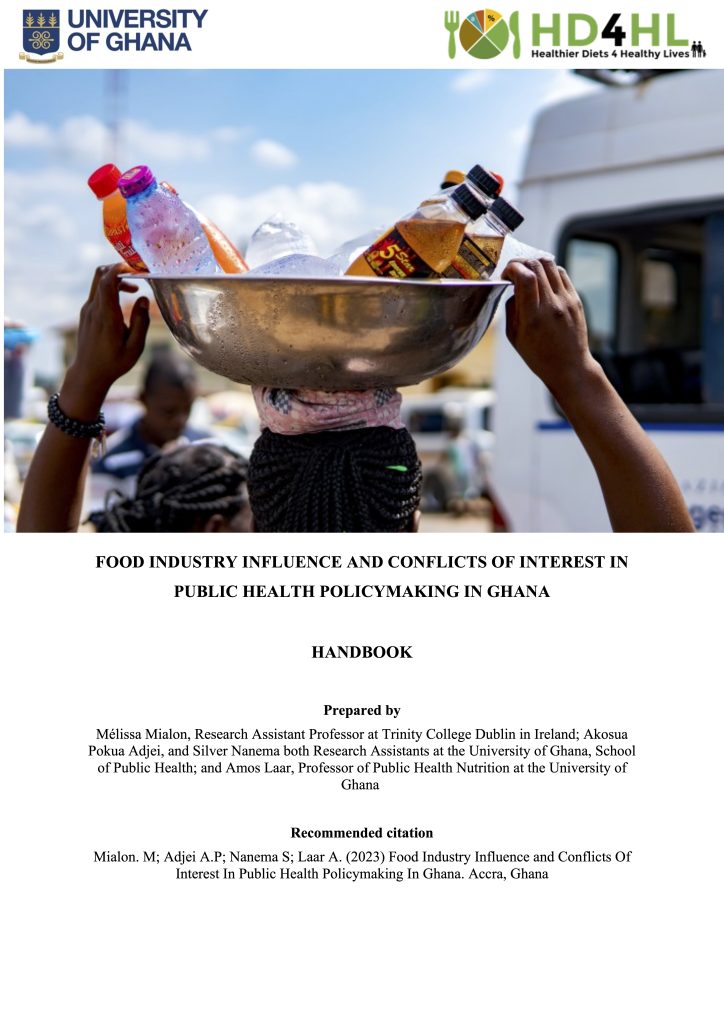
The handbook offers insights into how the industry impacts public health policies while addressing conflicts of interest, with examples from Ghana. Its purpose is to educate Ghanaian policy actors, referred to as the M3T, or Multi-Stakeholders Technical Task Team, which plays a vital role in shaping food-based policies in the country. Designed in anticipation of potential efforts to influence policy development, the handbook promotes best practices for developing food policies for Ghana through the HD4HL project. Its content has been applied in a workshop to equip policy actors with skills necessary to identify tactics that qualify as industry influence and situations leading to conflicts of interest, enabling them to manage these effectively. The creation of the handbook was informed by expert knowledge and a review of relevant peer-reviewed literature along with mainstream media coverage. Furthermore, it includes cases and arguments that counter the claims made by the food industry.